

A Complete Timeline for Hair Transplants for Men and Women
Last update : 27 Fév 2026
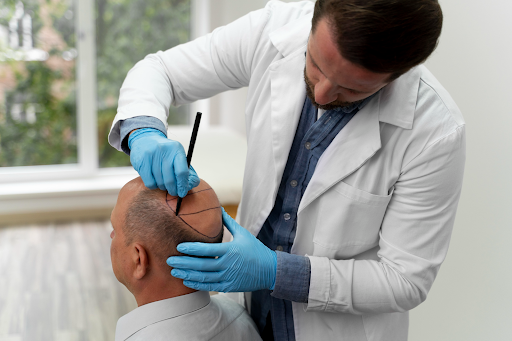
Nowadays, both men and women acknowledge hair transplants. Well, knowing the timeline is important before deciding to go for it.
Hair transplant before and after photos raise interest among bald people or within the ones with fast and stable hair loss. This is not an overnight process, and there are months of gradual progress in between. Hair loss or baldness affects the confidence of a person. A transplant can be effective here.
Setting realistic expectations is important for both men and women to obtain satisfaction. You need to be patient and be aware of the overall treatment process. The hair restoration market of Canada is set to maintain a CAGR of 15.8% till 2030. This indicates that Canadian men and women prefer this treatment.
Modern clinics provide natural-looking and lasting results. Well, getting the desired look is not possible if you are impatient or if you acknowledge a poor aftercare procedure. This article offers a complete timeline for hair transplant for both men and women.
Hair Transplant Timeline for Men and Women
Are you dealing with stable hair loss? If so, you need to visit a hair transplant clinic (clinic hair transplant). Well, you must have a good idea of the overall timeline. The overall timeline is similar for men and women, but there might be a slight difference in goals and final results. Let’s find out.
| Stages | Timeframe | Key Activities | Tips |
| 1. Consultation and pre-procedure preparation | Week 0 | Initial consultation, eligibility test, evaluation of medical history, scalp analysis, etc. | Stop smoking and alcohol, certain medications (talk to your doctor), and scalp care, |
| 2. The procedure day | 1 day | Preparation of the donor and recipient area, getting ready for the chosen procedure, and administering local anesthesia | Visit the clinic early, obey the surgeon’s advice, and arrange transportation |
| 3. Initial recovery phase | Week 2 to 4 | Experience redness and swelling, start taking medication, and experience shock loss | Ignore direct sunlight and consult your doctor if you feel any discomfort |
| 4. Healing and Shedding phase | Months 1 to 3 | Hair entering the resting phase and shedding starts | Consult your doctor if any inflammation persists |
| 5. Early growth phase | Months 4 to 6 | Emergence of new hair | Stay patient |
| 6. Noticeable result phase | Months 7 to 9 | Natural shaping of the hairline and growing of thicker hair | Follow the doctor’s instructions |
| 7. Maturation phase | Months 10 to 12 | Improvement of texture and an increase in density | Style your hair as you want |
| 8. Final result | Months 12 to 18 | Experiencing the final result | Seek a doctor’s advice for any touch-up |
| 9. Maintenance and long-term results | After 18 months | Hair transplant lasts a lifetime if maintained properly | Stop smoking, avoid stress, and follow your doctor’s instructions |
Table 1: Hair Transplant Timeline
Step 1: Consultation and Pre-Procedure Preparation
A patient needs to talk about his or her goal related to hair transplant in the initial consultation phase. This differs between men and women. Men often prefer hair transplantation for filling bald spaces or restoring receding hairlines, whereas women like to obtain an overall density increase across the scalp.
In this stage, the doctor evaluates hair loss, medical history, and sets realistic expectations. Scalp analysis and donor hair assessment are also performed. The different hair transplant techniques (FUE and FUT) are discussed, and a personalized plan is created.
You need to provide details like your age, hair density, hair loss pattern, and health conditions to understand whether you are eligible for the treatment. Get aware of how does a hair transplant work. You need to stop smoking, scalp care, and take certain medicines at least a week before the procedure. Here is a pre-surgery preparation checklist.
| Preparation Step | Why is It Needed |
| Stopping smoking and alcohol | Improvement of circulation and healing |
| Ignoring blood thinners | Lowering bleeding risks |
| Following a diet and hydration plan | Promoting scalp health |
| Arranging post-surgery transport | Preventing strain after the procedure |
Table 2: Main Preparation Steps
Following the stated preparation steps makes you prepared for the big day. Get clarity on the process (Follicular Unit Extraction or Follicular Unit Transplant) that suits you.
Step 2: The Day of the Procedure
What to expect on the procedure day? After arriving at the clinic, the donor and the recipient areas will be prepared. The surgeon will consider local anesthesia so that you do not feel uncomfortable during the process. The procedure will last for 4 to 8 hours. Well, the duration depends on the number of grafts.
Referring to Follicular Unit Extraction (FUE), the main considerations are administering local anesthesia, extracting hair follicles from a donor area individually, and the implantation of the follicles into the recipient area. The major steps of Follicular Unit Transplant (FUT) are surgical removal of a skin strip from the donor area and dissecting it into individual follicular units for implantation. Here is a comparison between the two processes.
| Technique | Scarring | Recovery time | Best for |
| FUE | Minimal (dot scars) | 5–7 days | Short hair or minimal scarring |
| FUT | Linear scar | 10–14 days | Larger coverage areas |
Table 3: FUE vs FUT
Step 3: Initial Post-Surgery Phase
The first two to four weeks after you go for a hair transplant are crucial because you will see redness, itchiness, swelling, etc. You need to take OTC medication if you feel discomfort or experience any trouble sleeping. You can experience shock loss, which is common in this stage.
Aftercare is important to obtain positive hair transplant results, and it starts from this phase. You must avoid UV rays and should sleep upright. Consider the instructions of your surgeon regarding washing your hair. You can return to work after a week but it’s better to ask the doctor.
Step 4: Growth Phase
Do hair transplants work? In short, yes. But this largely depends on how to react in this phase. Here is the month-by-month timeline.
Healing and Shedding Phase: Months 1–3
In this period, more hair will enter the resting phase (telogen) and will eventually fall out (exogen). This mainly drives shedding after a hair transplant.
You will not see any visible result in this phase. Don’t worry, it’s quite normal. If you see any persistent inflammation, consult your doctor.
Early Growth Phase: Months 4-6
Is the wait a bit longer? It is, but you will see new hair emerging once you are in the fourth month. The new hairs might be thin, but you need to maintain patience. With time, they will become stronger and thicker.
Noticeable Results Phase: Months 7-9
Noticeable hair transplant results will be seen in this phase. You will see a noteworthy growth spurt from your new hair. Hairs will become stronger. Also, the hairline will shape naturally. Consult your doctor for any necessary instructions.
Maturation Phase: Months 10-12
In this phase, your hair will become dense and its texture will improve. New hair will continue to grow at a rate of 1 to 2 cm per month. You can style your hair freely.
Final Results: Months 12 to 18
You can see the final result within this span. All the transplanted hair will penetrate through the scalp. You will no longer be called bald.
Men might see the final result within 12 months, but it can be 12 to 18 months for women. If required, any minor adjustment can be made.
Step 5: Maintenance and Long-Term Results
How long do hair transplants last? If done correctly, it can last for a lifetime. To obtain it, you need to maintain your hair. Here are some of the tips for you.
- Conduct daily scalp care
- Ignore smoking
- Don’t take much stress
- Follow the clinic’s aftercare regimen
Who is not the Right Candidate for a Hair Transplant?
You are ineligible for a hair transplant if you have:
- Unstable medical conditions (hypertension, diabetes, etc.)
- Immune deficiencies
- Psychological disorders
- Temporary hair loss
Final Thoughts
Hair transplant is a commonly adopted procedure to combat hair loss or baldness. To get the desired outcome, you need to be patient and follow the aftercare strategies. FUE and FUT are the common hair transplant processes. Following your clinic’s instructions in the initial stages of the growth phase helps you in the emergence of new hairs in the maturation phase.
Planning for a Hair Transplant to get your Confidence Back?
Choose a reputable clinic to get your hair transplant done. We are experts in hair transplants. We promise to offer you the highest quality care. Visit our clinics in Gatineau, Montreal, or Laval and get a consultation.
Frequently Asked Questions (FAQs)
1. What type of blood tests are performed before a hair transplant?
The primary types of blood tests that are done for a hair are CBC, bleeding and clotting time tests, and HIV tests. Dermatologists might also perform thyroid function, hormone levels, and blood sugar tests.
2. What can be an ideal diet after a hair transplant?
Your diet must include lean proteins, such as fish, eggs, and chicken. You can add dark leafy greens, beef, and lamb to your meals as they are rich in iron.
3. Does a hair transplant cause brain problems?
No, a hair transplant does not cause any brain problems. This is because the surgery is performed on the scalp and does not come into contact with the brain. This is a myth that people must stop believing.
4. Does transplanted hair look natural?
Yes, transplanted hair definitely looks natural. Here, naturally growing groups are taken out and implanted. It is not possible to differentiate natural hair and transplanted hair after 18 months.